SaaS data governance
Rogue AI? Shadow IT? Now you can see it.
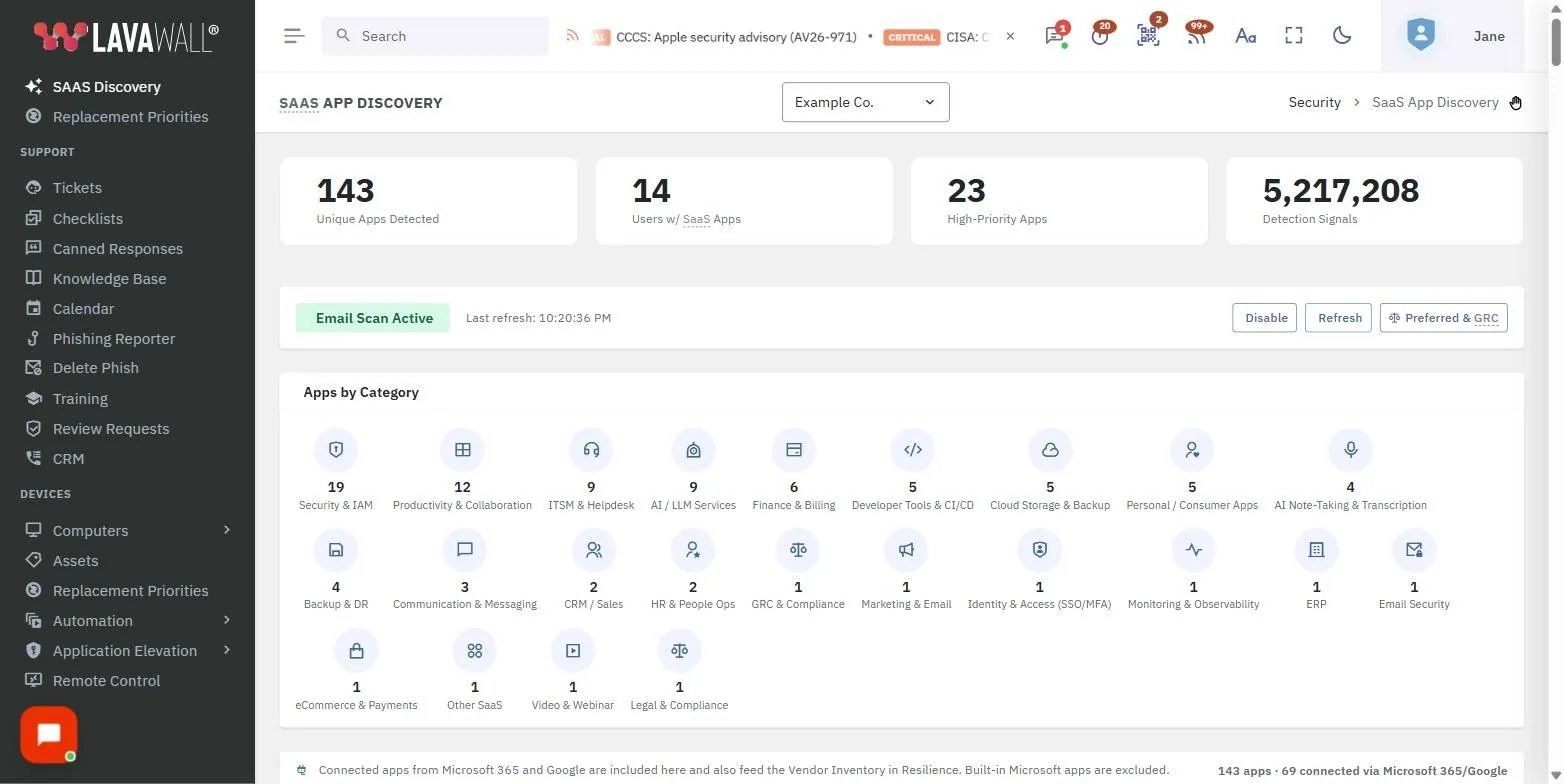
Lavawall® reviews email metadata against a curated list of 1,277 SaaS applications to show how many people, and exactly who, use each service. Your firewall shows thousands of apps and tells you nothing useful. Named users are what turn governance from guesswork into action.
Start my free trial, no credit cardThe shadow-IT problem
1,277 curated SaaS apps · named users · low false positives
See it in the Lavawall® console
Real screens, shown with example data.
From noise to a named list
Curated to cut false positives
Matching against 1,277 known SaaS applications keeps false positives down, so the list you review is real usage rather than every domain a browser ever touched.
Who, not just how many
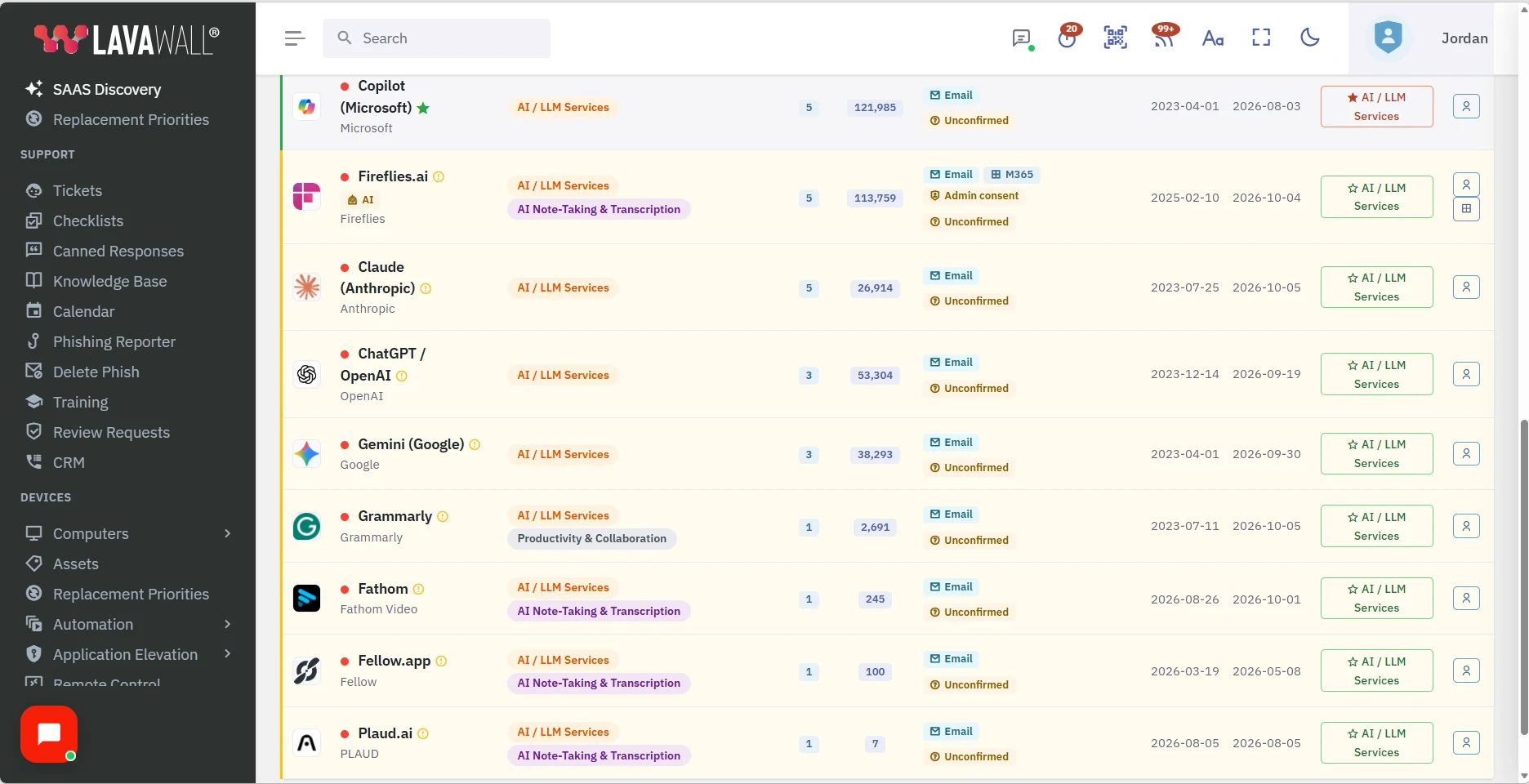
See the actual people using each service. That’s the difference between “something’s out there” and a conversation you can act on.
Catch rogue AI early
Unsanctioned AI tools are the fastest-growing shadow-IT risk. Discovery surfaces them so you can sanction, block, or govern before company data walks out the door.
See the AI agents on your computers
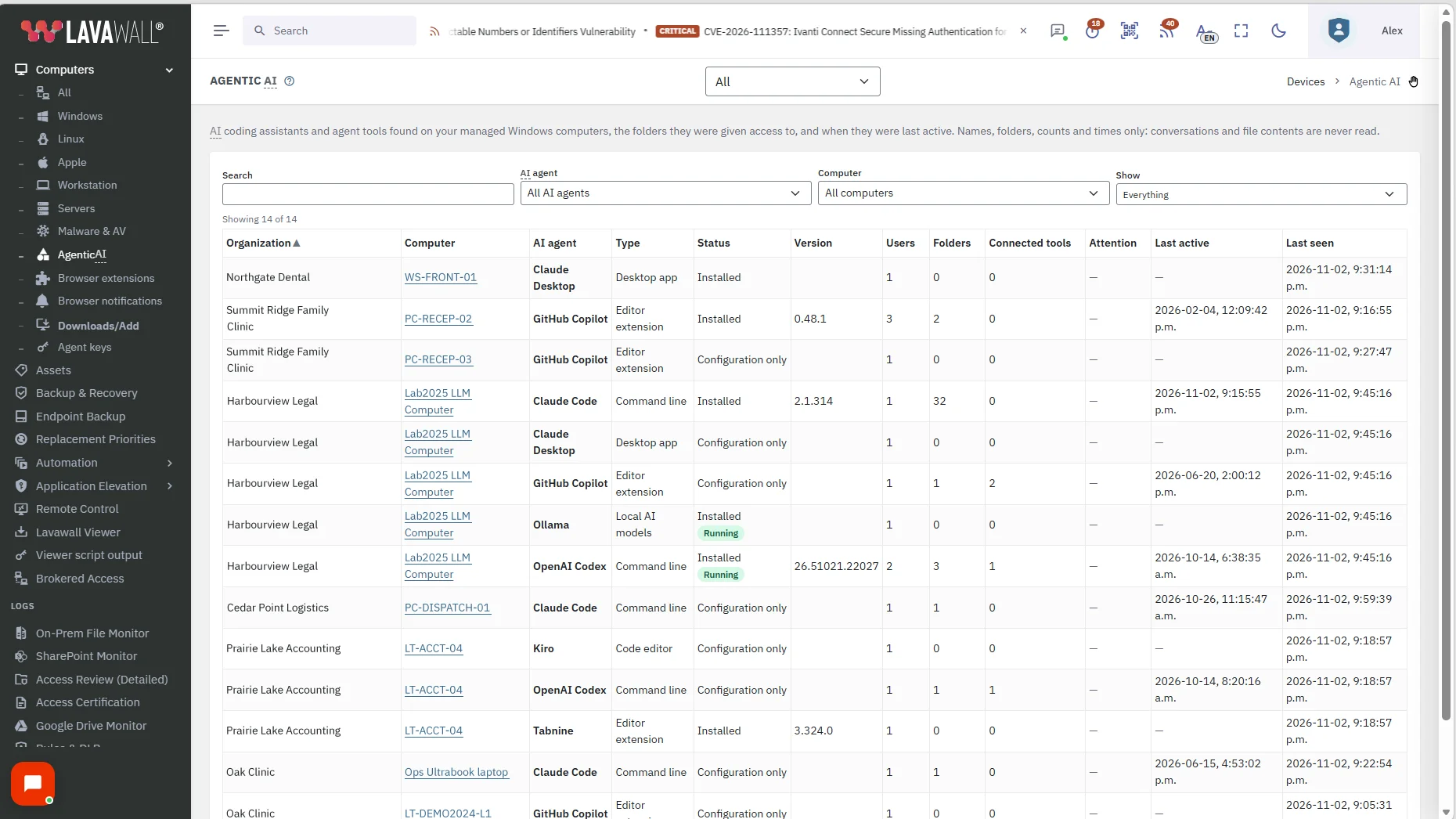
Coding assistants and AI agents can read files and run commands on the computers they are installed on. Lavawall lists the ones found on your managed Windows computers, the folders they can reach, and the set-ups worth a second look, so you can tighten them before they cause a problem.
Governance you can defend
Turn discovery into policy: approve what belongs, retire what doesn’t, and show an auditor you actually know where your data lives.
- 1,277 curated SaaS apps matched
- 7,400+ apps in the public catalogue
- Search and filter by category
- Mark the approved tool in a category to expose the rest
- Named users as well as counts
- Rogue-AI and shadow-IT flags
- AI agents and coding assistants on managed computers

Need a SaaS governance policy that sticks?
ThreeShield, the CISSP/CISA team behind Lavawall®, will help you triage what discovery finds and build governance your leadership and your auditors accept.
Common questions
- How does SaaS discovery work without a browser agent?
- It reviews email metadata against a curated list of 1,277 known SaaS apps, which keeps false positives low, and it names the actual users. AI agents on managed Windows computers are listed separately.
- Can it see AI agents on our computers?
- Yes. Lavawall lists the AI coding assistants and agent tools on your managed Windows computers, the folders they can reach, and set-ups that deserve a second look.
- Why isn’t my firewall’s app list enough?
- A firewall shows thousands of apps with no sense of which hold company data or who signed up. Lavawall® turns that into a named, prioritized picture.
- Does this help with rogue AI?
- Yes. Unsanctioned AI and shadow SaaS are exactly what it surfaces, so you can sanction, block, or govern them.